
 ES








Prepare an Aetna Child Virtual Visit
Confirm the program, provider pathway, and visit fit before your child connects.
Start with the program printed on the member card
“Aetna” alone is not enough information to verify a child’s virtual appointment. Aetna Better Health of Texas publishes separate benefit materials for Children’s Health Insurance Program, or CHIP, STAR Medicaid, and STAR Kids. Each program has its own member handbook, service area, network, cost-sharing rules, and care-coordination features.
VirtualCare2go’s official Aetna page specifically states that the organization accepts Aetna Better Health CHIP, along with several other Aetna commercial and Medicare products. That statement should not be stretched into a guarantee for every Aetna Better Health Medicaid product, every clinician, or every service. A family with STAR or STAR Kids should confirm the provider and benefit pathway before scheduling. CHIP families should verify the appointment too, because active eligibility, service area, network, visit type, and date still matter.
VirtualCare2go sees pediatric patients beginning at age 5. Children younger than 5 are not seen through this service. Families seeking care for a younger child should contact the child’s pediatric clinician or another age-appropriate care setting; emergency symptoms always require 911 or the nearest emergency department.
CHIP, STAR, and STAR Kids are not interchangeable labels
Look at the child’s card or the Aetna Better Health member portal. Write down the program as shown.
- CHIP provides children’s health coverage for eligible Texas families. Aetna Better Health states that its CHIP and CHIP Perinatal programs serve members in the Tarrant and Bexar service areas.
- STAR is Texas Medicaid managed care for many eligible members. The child’s card and plan materials identify the applicable plan and network.
- STAR Kids is a Texas Medicaid managed care program for members age 20 or younger with qualifying disabilities or complex needs. Texas HHS explains that STAR Kids members choose from health plans available in their service area and receive service coordination.
The program name changes which handbook, provider directory, and Member Services contact applies. It may also affect copays, referrals, prior authorization, pharmacy benefits, and who helps coordinate care. Do not select “CHIP” in a scheduling form because it seems closest if the card says STAR or STAR Kids.
Verify five details for this appointment
Use the number on the member card or the appropriate Aetna Better Health of Texas member channel. Frame the question around one specific appointment rather than asking only whether telehealth exists.
Confirm:
- Program and eligibility: Is this child currently enrolled in CHIP, STAR, or STAR Kids on the proposed service date?
- Service area: Is the child’s address and service area current, and does this plan operate there?
- Provider network: Is VirtualCare2go, the scheduled clinician, or the named billing entity in network for this exact program?
- Service and format: Is a virtual evaluation for the child’s stated non-emergency concern covered through this provider pathway?
- Member responsibility and rules: Does a copay, referral, authorization, designated telehealth vendor, or primary-care requirement apply?
Record the date, representative, answer, and reference number when available. Ask which provider identifier was checked. A cost estimate is not a guarantee; final responsibility depends on eligibility, plan terms, network status, services actually delivered, coding, and claim processing.
Aetna Better Health also publishes its own telehealth pathway. Ask which pathway applies; a healthcare organization’s acceptance statement is not the same as plan-specific coverage.
Decide whether video fits the child’s current need
For patients age 5 and older, VirtualCare2go lists virtual evaluation for many non-life-threatening concerns, including cough, fever, allergies, nausea, rash, sore throat, pink eye, and urinary symptoms. Children younger than 5 are not eligible for VirtualCare2go visits. The symptom list is not a promise that every eligible patient, severity level, or presentation can be treated remotely.
A virtual clinician can take a history, observe the child, review visible findings, discuss available measurements, and recommend a plan. Video cannot reproduce every hands-on examination or provide imaging, specimen collection, procedures, or immediate treatment. Ear pain may require an otoscope exam. Breathing concerns may need lung sounds and reliable vital signs. A sore throat may need testing. Abdominal pain can require palpation and urgent in-person assessment.
Before booking, confirm that the patient is at least 5 years old, that VirtualCare2go sees patients of that age for the stated concern, and whether a parent or legal guardian must be present. Only the clinician can make the final care-setting decision.
Call 911 or go to the nearest emergency department for severe trouble breathing, blue or gray lips or face, chest pain, new confusion, inability to wake, a seizure, major bleeding, signs of severe dehydration, a serious allergic reaction, or another possible emergency. For a medically complex child or rapidly worsening symptoms, seek prompt professional guidance and use a lower threshold for in-person care.
Prepare the child’s story, not a guessed diagnosis
Parents often know many details but deliver them out of order when worried. A short timeline helps the clinician see the pattern.
Prepare:
- The child’s age, weight when recently and reliably measured, and relevant diagnoses
- The main symptom and exact start time or date
- Whether symptoms are improving, stable, or worsening
- Temperature and how it was measured
- Drinking, urination, sleep, breathing, activity, and alertness
- Exposures at home, school, sports, or child care
- Current medicines, doses, allergies, and treatments already tried
- Recent testing, procedures, hospital care, or specialist instructions
- The preferred pharmacy and pediatrician or primary care contact
Do not force a child to perform an activity that causes pain or shortness of breath for the camera. Do not rely on a single home-device reading when the child looks seriously ill. Share the device, number, time, and trend, and let the clinician interpret it in context.
For a visible rash, use bright indirect light and a neutral background. Share requested images only through an approved secure channel.
Give the child or teen an appropriate voice
Confirm guardian and consent requirements before the appointment. A school-age child usually needs an adult to provide history and help with the camera. An adolescent may be able to describe symptoms directly and may need private time with the clinician for sensitive questions, consistent with law, consent rules, and clinic policy.
At the start, identify everyone in the room. A parent can clarify the timeline without answering every question for the teen. Request an interpreter, captions, or other communication support when needed; do not use another child as the interpreter.
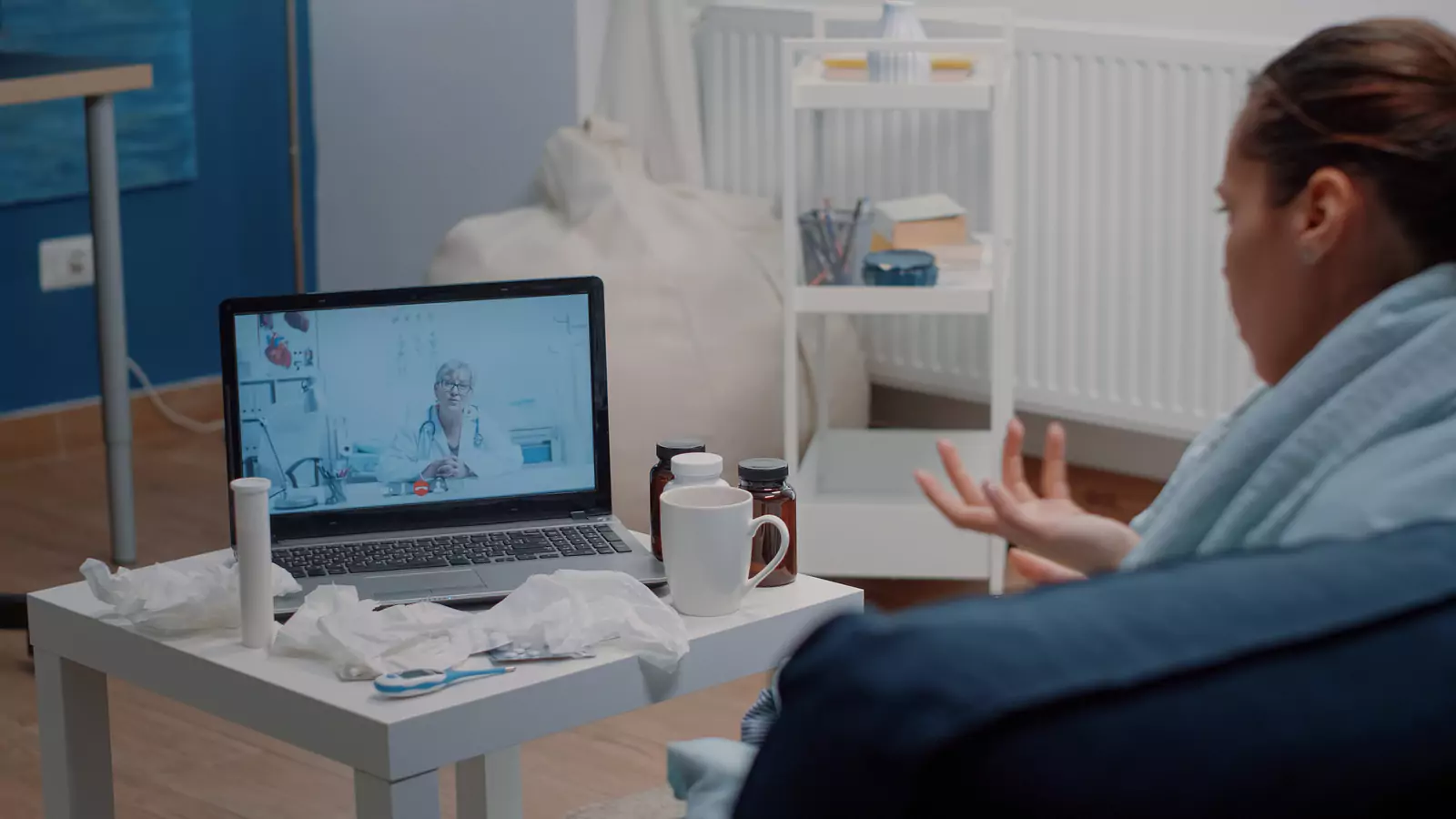
Set up a quiet, well-lit room with a charged device, stable camera, working audio, and reliable connection. Keep the member card, medication containers, thermometer, and notes nearby. Provide the child’s physical location and a callback number in case the connection drops. Never join while driving.
Build follow-up around the child’s existing care team
A virtual urgent visit should not become an isolated record. Before disconnecting, ask:
- What should we do today?
- Does the child need testing or a hands-on examination?
- Which symptom or measurement means we should go in person immediately?
- When should we expect improvement or arrange reassessment?
- Who will communicate results?
- What information should go to the child’s primary care clinician, specialist, or STAR Kids service coordinator?
For STAR Kids members, service coordination can help families connect services and providers, but it does not replace urgent clinical judgment. Contact the coordinator when the care plan, equipment, home services, or specialist follow-up may be affected.
Prescriptions are never guaranteed. They depend on the child’s evaluation, age, history, law, and clinical judgment. If medication is prescribed, confirm the exact pharmacy, dose, and instructions. Check the pharmacy benefit separately when needed.
Save the visit summary, plan-verification note, referrals, test orders, and deadlines in one place. If the explanation of benefits later differs from the estimate, ask whether eligibility, network, authorization, coding, or another plan rule affected processing. An explanation of benefits is not necessarily a bill.
Confirm the exact route before connecting
Start with VirtualCare2go’s official Aetna insurance page, then review online urgent care, how VirtualCare2go works, and the VirtualCare2go FAQ.
VirtualCare2go does not see children younger than 5. For patients age 5 and older, confirm current appointment availability, guardian requirements, and clinical fit. VirtualCare2go publishes (817) 508-8169 or email us at info@VirtualCare2Go.com.
Verify Aetna Better Health of Texas program eligibility, service area, provider network, authorization, coverage, and costs through the member channels on the child’s current card or portal. Coverage and patient responsibility depend on plan terms and cannot be guaranteed by this article or by a general acceptance statement.
Medical Disclaimer: This article is educational and is not a diagnosis, individualized medical advice, or a substitute for professional care. VirtualCare2go serves pediatric patients age 5 and older and does not see children younger than 5. For eligible patients, virtual-care suitability and availability depend on history, severity, location, scheduling, consent requirements, and provider assessment. Call 911 or go to the nearest emergency department for an emergency. Content involving children, medications, or treatment should receive clinical review before publication.